
Does A Fund Always Do What Its Name Suggests?
- Feb 23, 2017
- 3 min read
Most funds name themselves after the core strategy they pursue. For example, the iShares Gold Trust invests in, you guessed it, gold bullion. You won't find Apple stock inside this ETF! The fund description properly describes the nature of the holdings within the fund.
However, not all funds live up to their names. This can create Asset Allocation challenges, and unknowingly increasing an investor's portfolio risk.
Names Matter
You'd never invest in the "Mediocre Mid Cap Fund", would you? Doesn't putting your money into the "Strategic Growth Opportunities Fund" sound more enticing? You bet it does!
Fund companies attract investor dollars based not just on returns, but also on the perception of future greatness. Therefore, it only makes sense that they use sophisticated naming verbiage that sounds impressive.
Names Vs. Strategy
Wouldn't it be nice if a fund's name always represented exactly how it invested? Take the Growth Fund of America (American Funds, ticker AGTHX); this fund's name implies it seeks out and invests in US-domiciled stocks. However, when you look at the actual distribution of stock holdings within the fund, you find a relatively large 15% of the fund being dedicated to "Non US Stock". This 15% means that this particular fund is definitely not all American:
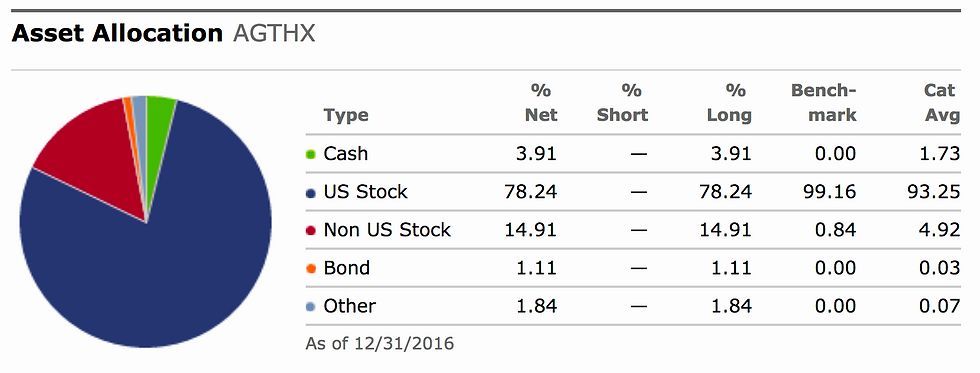
Source: Morningstar, 2/22/2017
Pay Attention To Composition
Late last year, I worked with a new client who hired me to build an all Vanguard portfolio for his income needs. One of the key mechanics I kept returning to in our conversations was that even at my beloved Vanguard, their funds don't always invest according to what their names suggest.
I was able to point this out after an analysis based on the client's current holdings from their statement. Like many investors, he had purchased specific funds under the assumption that those funds invested a certain way. What I showed was that their current portfolio was skewed towards US large companies and Limited Duration Junk Bonds, while underweighting asset classes such as US Small Caps and International Stocks.
As I often find and point out to new clients, their current holdings are usually overweighted to US Large Caps. Overweighting to a single asset class can be extremely frustrating over long periods of time, case in point being The Lost Decade:

Source: Data Courtesy of Dimensional Fund Advisors & Chart Generated via Aspen Leaf Partners
Another analysis finding showed that while the client thought they held a 60% stock / 40% bond portfolio, they actually held less than 30% bonds. This was more risk than they were willing to take! By analyzing the actual composition of each fund, we were able to easily address and rectify the portfolio shortcomings he didn't even realize he was exposed to.
The DIY Approach
This is a tough one for DIY investors or investors who simply want to check up on your current financial advisor's work. But, if you believe fund composition matters (it does), the time spent on your own holdings will probably be worth it.
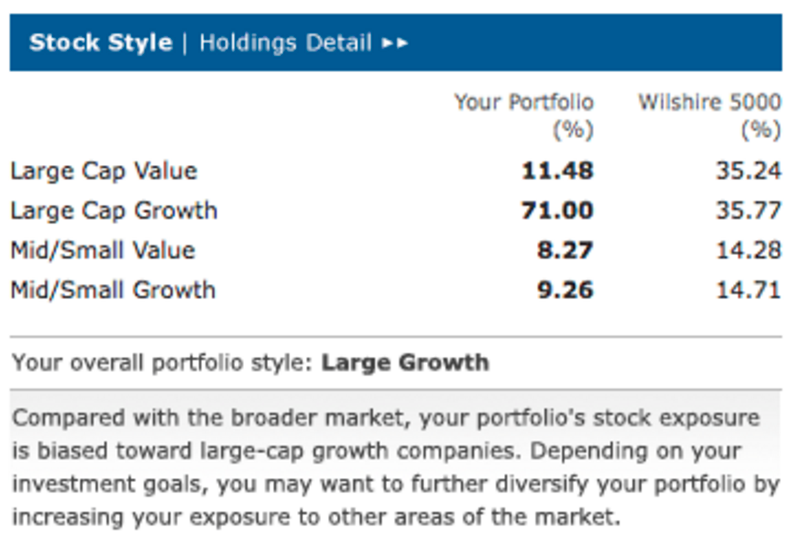
To get started, sign up for a Free Morningstar Subscription. Once registered, you can access their Tools Menu. The Instant X-Ray tool can provide a high level overview of allocation, stock style, expenses, and top holdings. Once you've entered your portfolio, The X-Ray Interpreter provides limited guidance, like the example to the right.
Although the X-Ray series of portfolio analysis tools provides a healthy amount of information, the shortfall many investors may still face with this level of "interpretation" is how to actually adjust their portfolios based on the output. In the hypothetical Interpreter I've created for this article, it's not clear which Large Cap funds should be trimmed, nor is it evident which funds should be purchased to pick up the slack.
This is where most investors might give up. I don't blame them in this respect! Personally, I don't spend time learning how to read my medical MRI charts and images. I leave that to the experts. The same analogy applies here. Realize the tool is designed for more knowledgeable investors, so it might not be for everyone.
Key Takeaways
Have a basic understanding of how you're invested. Ask your advisor if your asset allocation is designed using Morningstar's "Composition" criteria. If the answer is "no" or "I don't know", you're better off with a more knowledgeable money manager.
Don't buy a fund based on it's name. This can inadvertently create a portfolio that takes too much or too little for your risk tolerance threshold as well as your goals.
If you're struggling to understand exactly what your portfolio holds, ask a professional. Many advisors, myself included, will either manage your investments for you or give you the advice to implement on your own.


Comments