
Bias
- Apr 27, 2016
- 4 min read
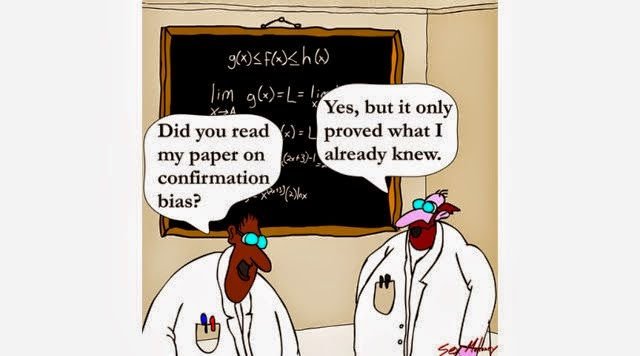
Consider the following statement:
If Donald Trump becomes president, he'll deport Muslims and build a wall on our southern border.
Do you agree or disagree with the implications of that statement? Did reading it make you like him more or less? Do you believe a President Trump would move America in a better or worse direction? Why?
Yes, it's a provocative statement- get over it. For the record, I really don't care what your political belief system is. For illustrative purposes, I picked an easy target that happens to be the subject of great debate for most Americans.
If you were already a Trump supporter prior to reading this blog you might interpret the statement in a positive light. Perhaps you like the idea that Trump isn't afraid to speak his mind, you like his plan to simplify the tax code, or maybe you believe his policies will ultimately provide more security for Americans. If any of these beliefs resonate with you, your pre-existing opinions regarding Trump downplay the contentious implications of his rhetoric. In your mind, you might not even believe Trump's vision for the country is controversial.
Maybe you already dislike Trump. His boisterous ego or radical approach to immigration, religious freedoms, and terrorism drives you bats%#t crazy. You're afraid if Trump is elected, he'll start WWIII. If you believe these things, the Trump statement made you cringe even more.
That was fun!
The phenomenons I just described are examples of confirmation bias. Confirmation bias can influence in three distinct ways; they way you gather information, the way you recall information, and the way you interpret information.
A major problem with confirmation bias is it can cripple our ability to assess things objectivity. Important decisions like those regarding money, religion, and health should be made only after objective and equal consideration from all sides of the argument. By searching out and validating science-ish evidence only supporting what you want to believe can lead to faulty choices affecting you, your family, and society.
In the investment world, I see examples of bias all the time. Let me start by picking on myself.
As I was leaving my former brokerage firm to start building Aspen Leaf Partners, I discovered Passive Investing. I spent way too much searching for academic and empirical evidence discrediting "active" market timing strategies. I was a rebel and I wanted a rebellious investment philosophy for company. I definitely had confirmation bias, and still do to an extent.
Investors have bias too. Consider the idea of recency bias; during a bull market you think it must keep going, and a recession feels like it will never end. Silly, right? Great, I'll call you out next time the market dips 10% and you're complaining!
Control bias; when your decisions lead to a favorable outcome and you attribute the success to skill, when in reality it was dumb luck. Portfolio managers are the worst offenders.
Risk bias; trading one type of risk for another. The classic example is eliminating stocks at retirement to focus entirely on safe bonds and cash. In this scenario, all you've done is trade one risk for another. I've yet to meet a retiree that shouldn't own some stocks to combat the very real threat of inflation. Most bonds don't have a mechanism to outpace inflation.
What about age bias? Is a financial advisor that's been in business for thirty years better than one that's been around half that time? Not necessarily. Sidenote- if you know how old I am go ahead; call me out on my own bias! However, I've met plenty of advisors in their 50s and 60s delivering the same bad advice they have been for the last three decades! A bad advisor with lots of experience can be the most dangerous since they tend to be overly confident (in their bad advice).
How about belief bias? Recognizing that biases exist as well as how we are personally influenced is a tough cognitive pill to swallow. It's imperative investors discover and react to their blind spots in order to make the most rational financial decisions.
You can blame your brain on all of this. We come hardwired with all kinds of biases that cause us to misinterpret information. This can result in regrettable decisions, or at least those that aren't in our best interest.
The best way to address biases you may not even realize you have is to adopt the intellectual strategy of Charles Darwin. I remember reading a lot about his process in college. As a scientist, he regularly tried to disprove his own theories, and was especially skeptical of his most compelling ideas. Applying that same approach to your personal financial situation can allow you to make better decisions. I speak from experience when I say acknowledging and addressing financial biases has enhanced the work I do with clients to a level I never imagined years ago.
I'm open to chatting about your biases, values, and goals. Use the Shoot Us An Email function in the footer below to reach out. Who knows, you might be surprised to learn something new you never considered could make a dramatic difference to your financial future.


Comments